The Timeless Charm of Pakistani Glass Bangles
The musical clink of traditional glass bangles in Pakistan (kanch ki chooriyan) holds a special place in South Asian cultural heritage. From festive celebrations like Eid and Chand Raat to weddings and bridal trousseaus, glass bangles remain the ultimate symbol of femininity, grace, and joy — a tradition passed down through generations of Pakistani households.
Color Meanings & Cultural Significance
In Pakistani tradition, different bangle colors hold deep symbolic meanings that still guide gifting and styling choices today:
- Red & Maroon: Represent passion, prosperity, and love — mandatory for brides and new beginnings, often the very first set gifted at a Mehndi.
- Green & Emerald: Symbolize nature, growth, good fortune, and traditional Eid festivities, worn heavily during Eid-ul-Fitr celebrations.
- Blue & Sapphire (Kanch Bangles): Represent tranquility, protection, and modern elegance, increasingly popular for everyday styling rather than just occasions.
- Yellow & Gold: Associated with Mayun, Mehndi rituals, and festive warmth, traditionally worn by the bride's close family.
- Black: Historically linked to protection against the evil eye (nazar), now also popular as a versatile everyday stacking color.
Kashmiri Chooriyan & Velvet Bangles Trend
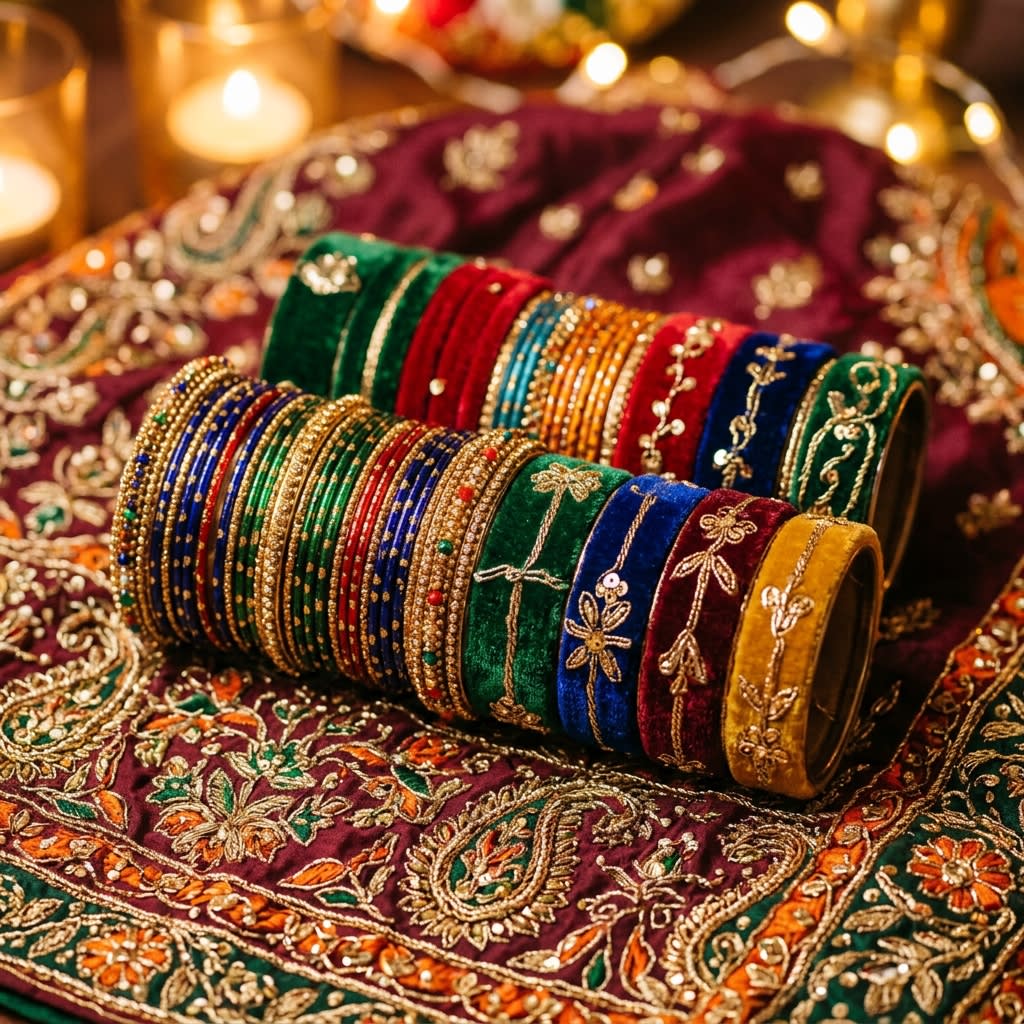
Alongside classic plain glass bangles, Kashmiri chooriyan decorated with intricate glitter work, Kundan embellishments, and soft velvet coatings have surged in popularity over the past few wedding seasons. Velvet glass bangles provide a rich matte contrast when stacked alongside shiny glass rings, and are often chosen specifically for bridal or Mehndi looks where the outfit already carries heavy embroidery.

Blue Glass Bangle
Kashmiri-style sets typically come in coordinated multi-piece stacks — combining thin glass rings, a central wider velvet or metal choori, and smaller glitter accents — designed to be worn together rather than as single pieces.
How to Measure Your Bangle Size Accurately
To ensure your bangles slip on comfortably without pinching, flatten your hand and bring your thumb toward your little finger, making your palm as narrow as possible. Measure around the widest part of your hand using a soft tape measure. Standard sizes in Pakistan range from 2.2 (small), 2.4 (medium), to 2.6 (large) — when between two sizes, sizing up is generally safer since glass bangles cannot be resized once purchased.
Caring for Glass Bangles
Glass bangles are naturally fragile, so a few habits go a long way: remove them before washing dishes or applying lotion, store them flat in a soft-lined box rather than stacked loosely in a drawer, and put them on last when getting ready to avoid knocking them against jewellery or hard surfaces. Velvet and glitter-coated chooriyan should be kept away from direct sunlight for extended periods, as prolonged heat exposure can dull the glitter finish over time.
Styling Glass Bangles for Everyday Wear
Beyond festive occasions, glass bangles have become a staple of everyday South Asian fashion — a stack of 4 to 6 thin glass rings in a single tone pairs easily with both traditional and Western outfits, while a bolder, multi-colored stack works better reserved for festive or bridal wear where it becomes a focal styling point rather than a subtle accessory.
Frequently Asked Questions
How many bangles are traditionally worn per hand? There's no fixed rule, but bridal sets often include 12–24 bangles per hand, while everyday stacks are typically 4–8 pieces.
Can glass bangles be resized if they don't fit? No — unlike metal bangles, glass bangles cannot be safely resized once formed, which is why accurate sizing before purchase matters.
What's the difference between kanch and Kashmiri chooriyan? Kanch bangles refer to plain colored glass, while Kashmiri chooriyan are typically decorated with velvet, glitter, or Kundan work and sold as coordinated multi-piece sets.